On my search for some interesting content on anything Japanese related, I encountered a website called 118 Yurika Tsutsumi. Her name is Yurika Tsutsumi I tried finding more about her but there isn’t much on her. So I will still mention her and her blog. Her blog isn’t like my mine but it provides information for someone who lives in Japan and in her posts she likes to talk about her day. She even talks about her culture and what is the right things to do and what not to do.
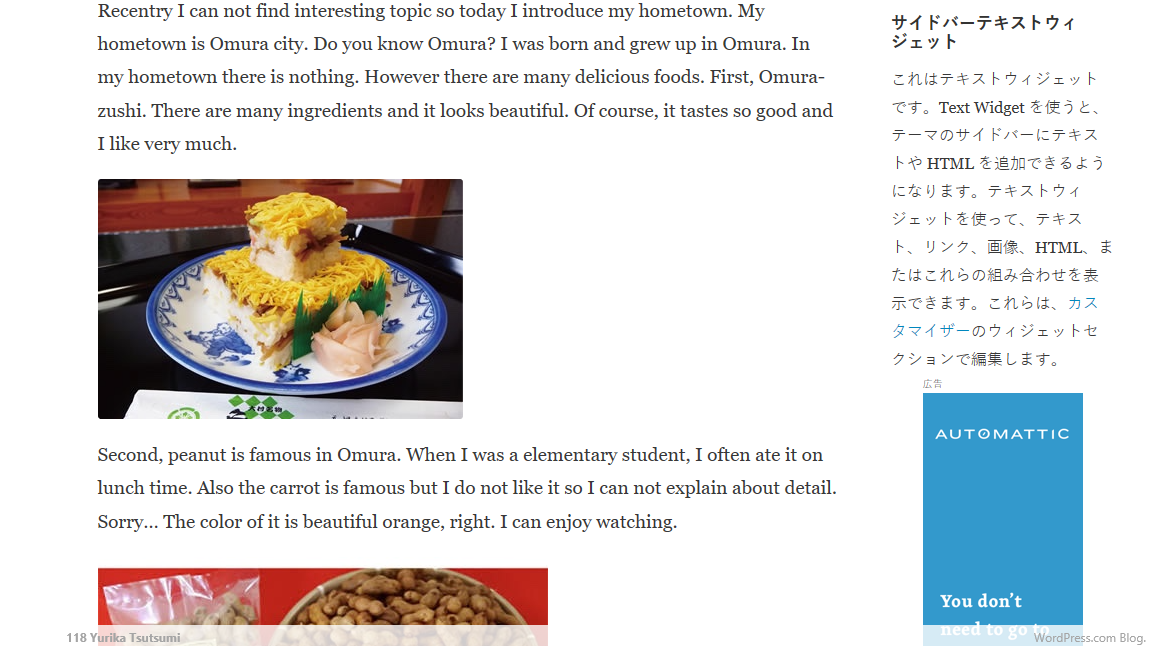
Yurika’s Blog Post. Screenshot : Veronica Campos
In the picture above you can see one of Yurika’s posts. In this post you can see that Yurika is talking about one of her hometown’s delights. These’s types of post is what I think make’s her blogs unique. Her posts cover her daily routines and places she had visited in Japan. She even mentions a few things to do or how to act. For example, how to properly sit down at a dinner table or the way to greet the elderly.
She covers mostly everything about Japan and I love how she gives opinions on what we should try. She gives a positive view in Japan and that is what I love about her blogs. She keeps the blog interesting with pictures and a few paragraphs that aren’t long and boring. Her pictures are well taken and very interesting. She gives me a visual perspective on how Japan is and I would consider her blog a must see.
Hello, my fellow readers. I feel like this month has gone by so fast since I started my blog. I want to take time to explain my experience so far in writing in this blog. So far I think it’s been a bit difficult trying to keep up with the blog and work and school. Yet I like to be able to blog about everything I research and it takes time and think a bit because I wouldn’t want to put too much information and bore you to death about it. I like to keep it short, interesting and simple. Promoting on social media was helpful so far in attracting people. I think the tools that help more were social media and the WordPress Reader in attracting people to my blog.
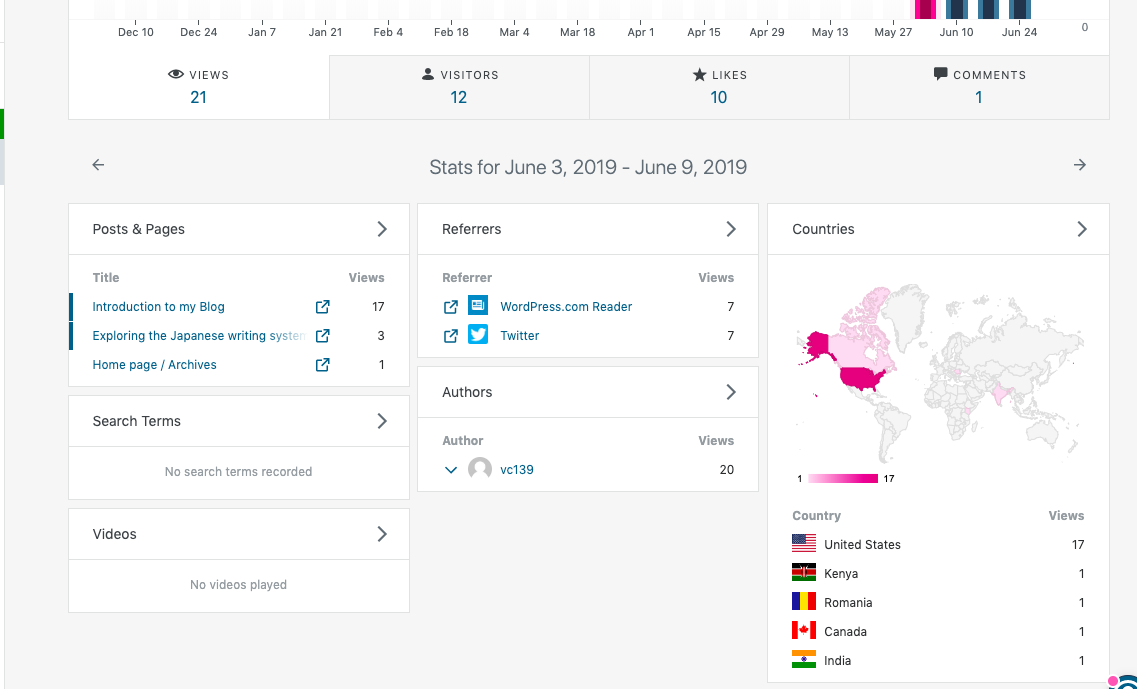
My Blog Stats. Screenshot by me.
I would love to be able to improve my website by making it look more colorful and make the website it self look interesting and intriguing. I would like to be able to include a whole page of where people could chat over anything relating to the website other than commenting under the blogs. I would like to think this experience will help me in the future if I want to get serious about blogging or for any social media because blogging is similar to posing on social media. I think these tools could help me in a job in the future, where I would be handling a website or social media and would be familiar with what I need to know.
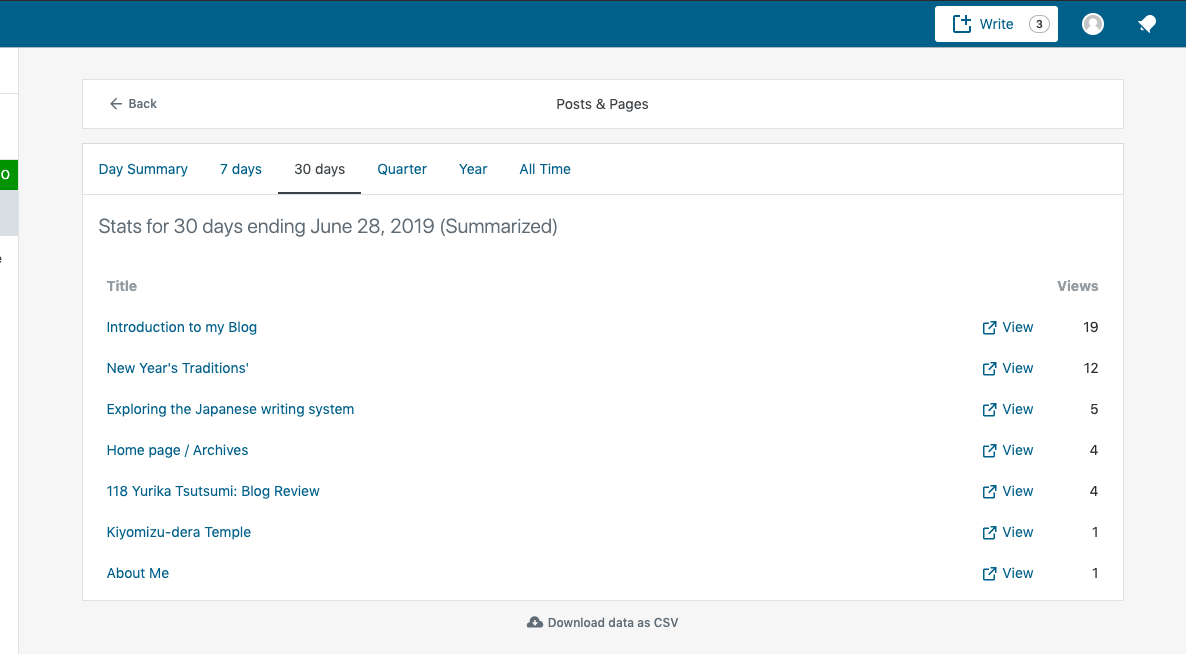
My views from High to Low per post. Screenshot by me.
My most popular week my blog had the most views was from June 3rd-June 9th 2019 with 21 views and 12 visitors. My most popular post so far was the first post, Introduction to my Blog with 17 views. I think it was my most popular because it was a new blog and I think people would like to see what a blog would be about before they continue with my content. I think the most surprising thing about my stats is the total amount of views and visitors so far. I wouldn’t think in the month I would get 46 views and 20 visitors.
Nobody knew where the word bento was origin of. What it is known is that Japan had been the first and still uses bento boxes till this day for the last thousand years. Though they used there own type bento boxes everywhere else in the world had started using bento boxes in everyday lives. You probably have your own type of bento box like the plastic containers you have in the kitchen. Below we will go over 2 different types of food that are very popular used in Japan in bento boxes. If you like to find some amazing bento box ideas click here.
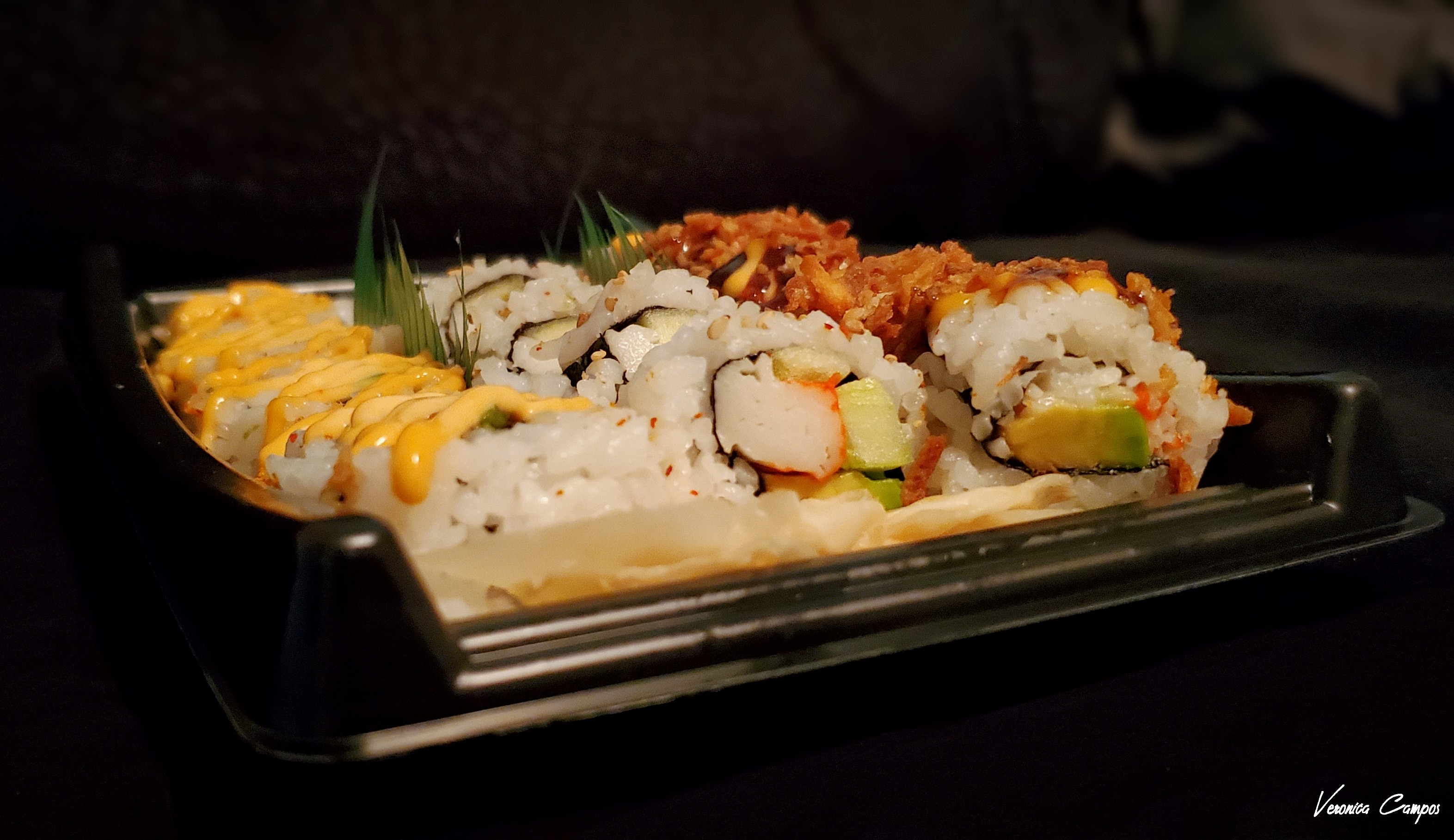
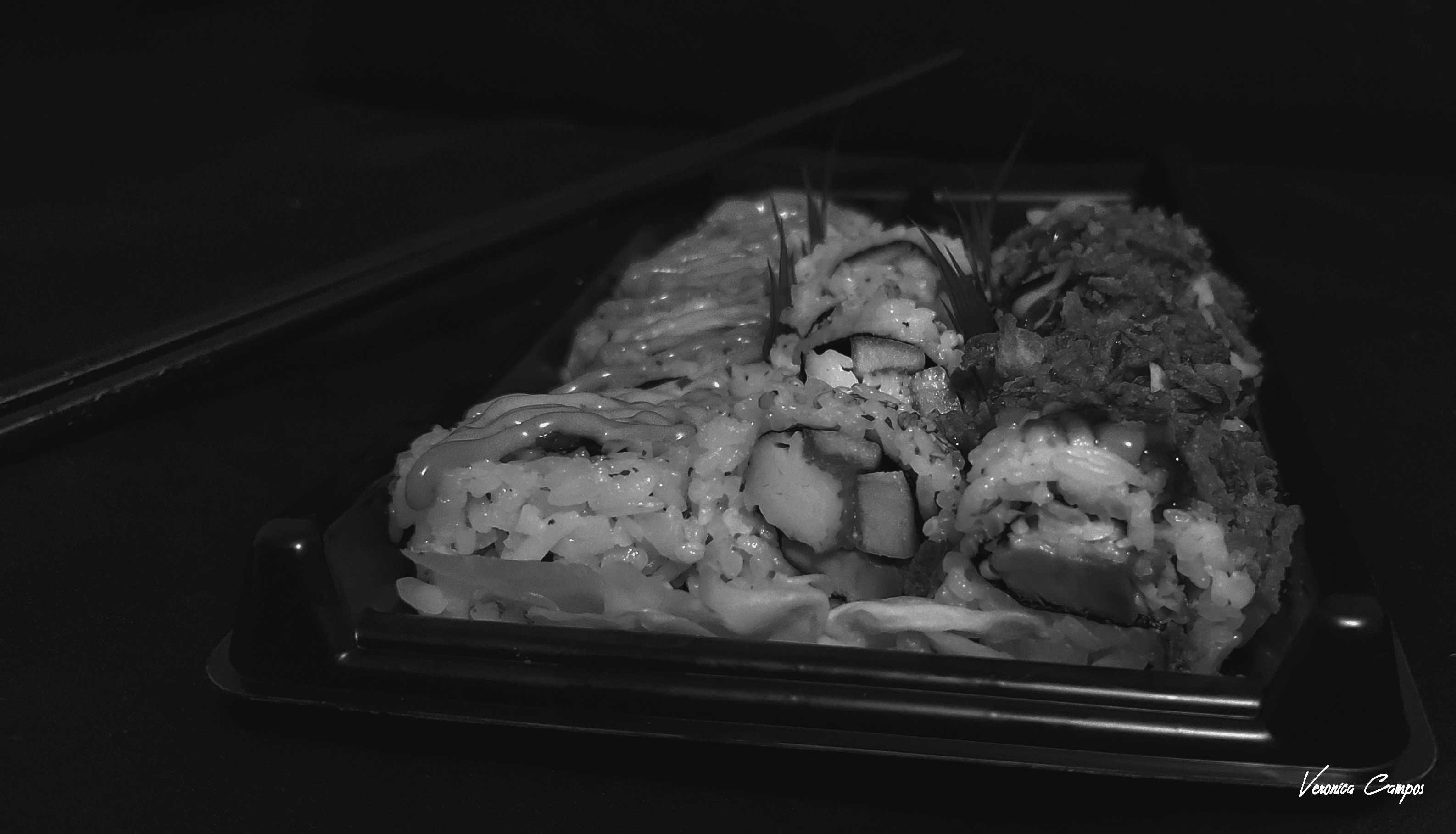
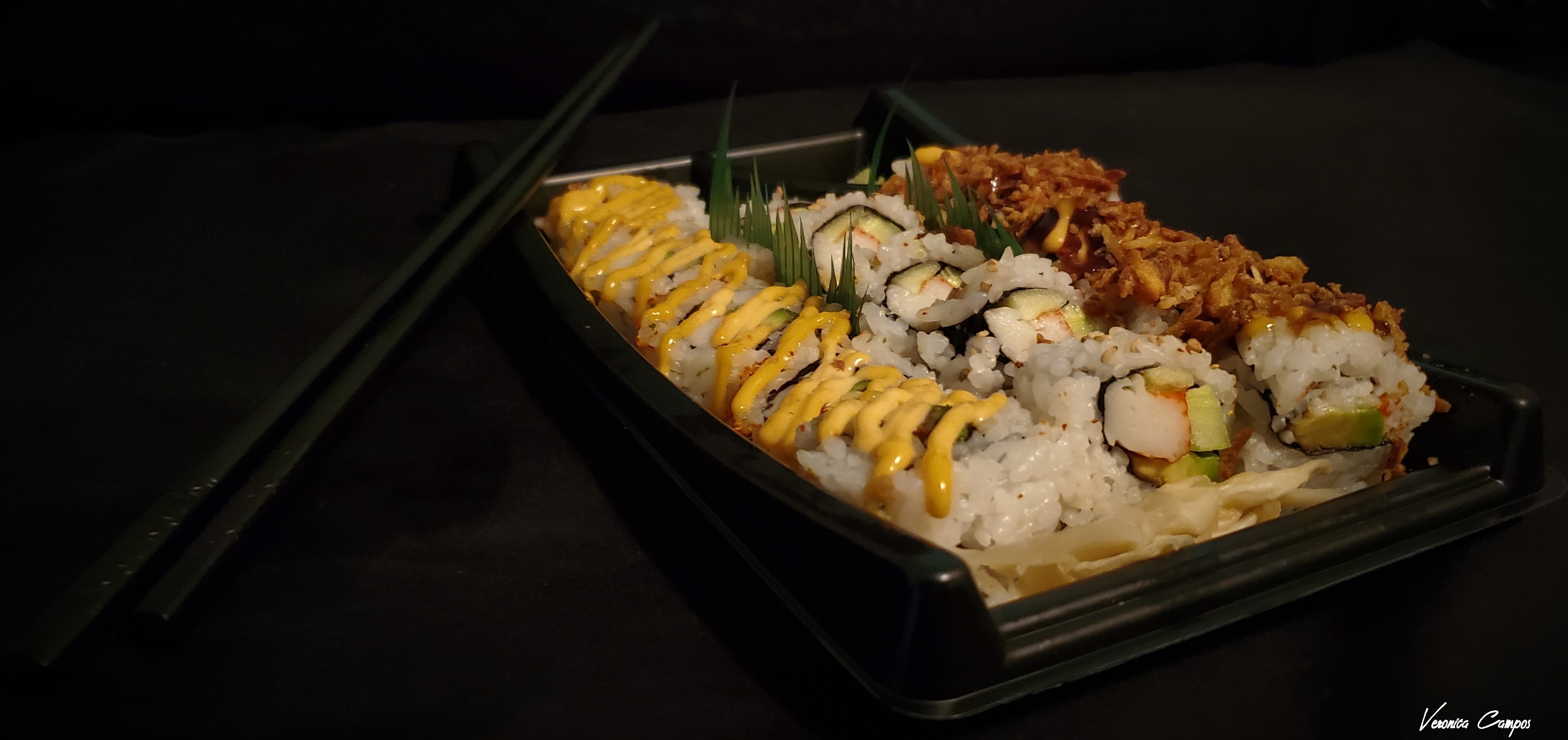
Sushi are usually put into bento boxes like other meals. People usually think that sushi always contains some type of raw fish but thats not the case. Sushi has many ingredients involved like cucumbers, rice, sesame seeds, seaweed and it could have the option of vegetables, crab-fish, salmon, shrimp or cream-cheese. Sushi’s originally was invented to be used to preserve fish. The rice when fermented would store the fish for up to a year. When the fish was needed from storage they would throw away the rice and use the fish. This whole process was called narezushi. Than in the 16th century an idea was formed where instead they should use vinegard rice so there wouldn’t be a need to throw the rice out and because of this idea sushi is now what it is today. The few pictures below show you a few pictures of some very delicious sushi I took, this sushi contains crabfish.
Sushi from a close up perspective. Photo taken by me.
Black and White Sushi. Photo taken by me.
Sushi and Chopsticks. Photo taken by me.
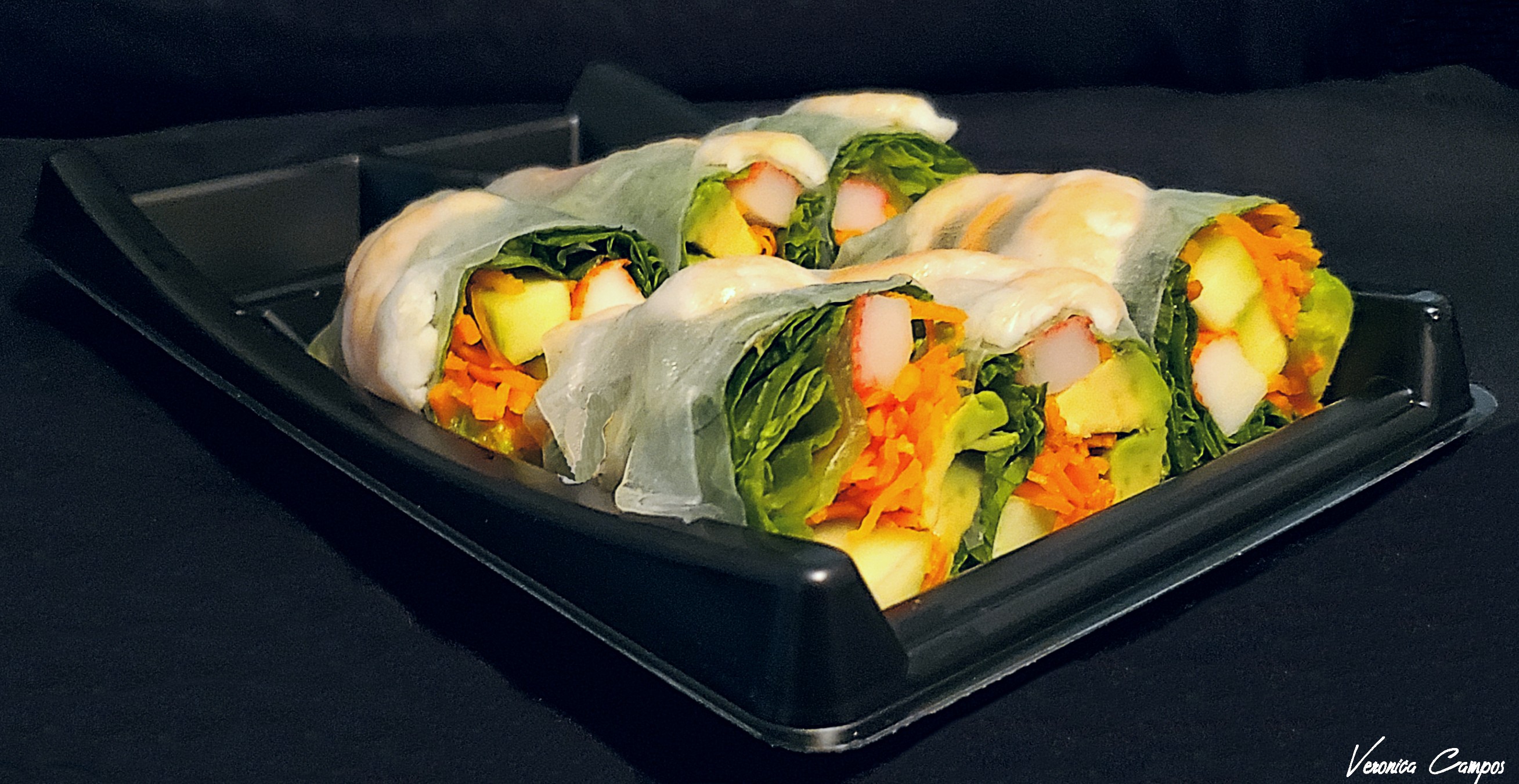
Vibrant Spring Rolls. Photo taken by me.
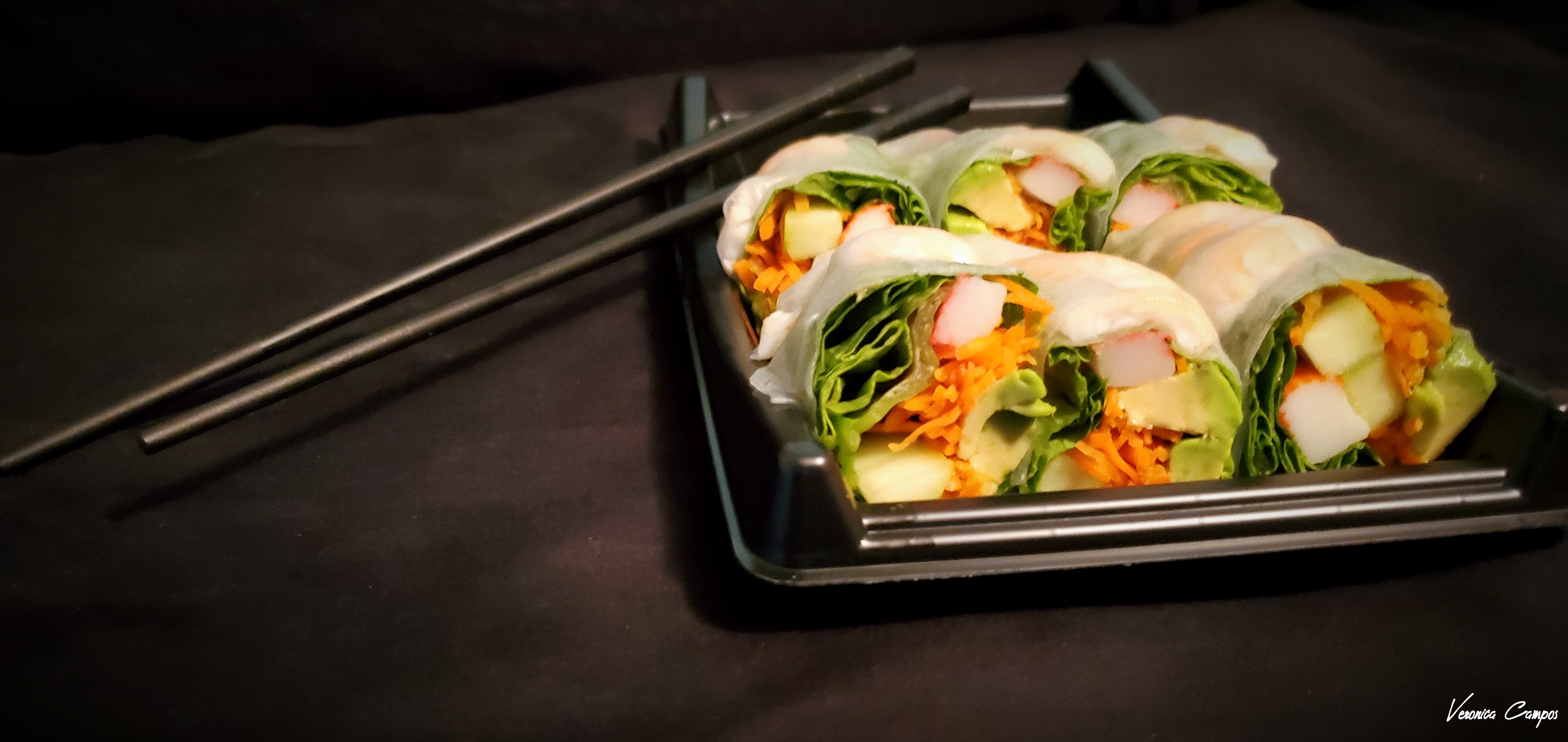
Spring rolls with chopsticks. Photo taken by me.
Another well known food used in bento boxes are Fresh Spring Rolls or Nama Harumaki. Spring rolls are actually originated from Vietnamese. The japanese people actually add a little twist to the spring rolls by using there own dipping sauce . The Spring Rolls are made of rice paper and wraps the roll that contains vegetables and shrimp. Its a very popular dish mostly among women who are looking to be in a diet. You can also fry them in a pastry sheet, which is well known in America as “egg rolls”. Above the last few pictures I took show you what the spring rolls look like.
In Japan they don’t just celebrate New Year’s with fireworks and drinks. In Japan the have a whole of modern and old traditions they do to prepare for the year. They infact use the whole week to prepare for a year of well-being and good luck. On New Year’s eve, every temple in Japan ring their bonsho, bells, 108 times. Which supposedly the number of times it rings represents every human desire. Which each one caused pain and sufuring and any negative emotions from the previous year be washed away. This ritual is called Joya no kane.
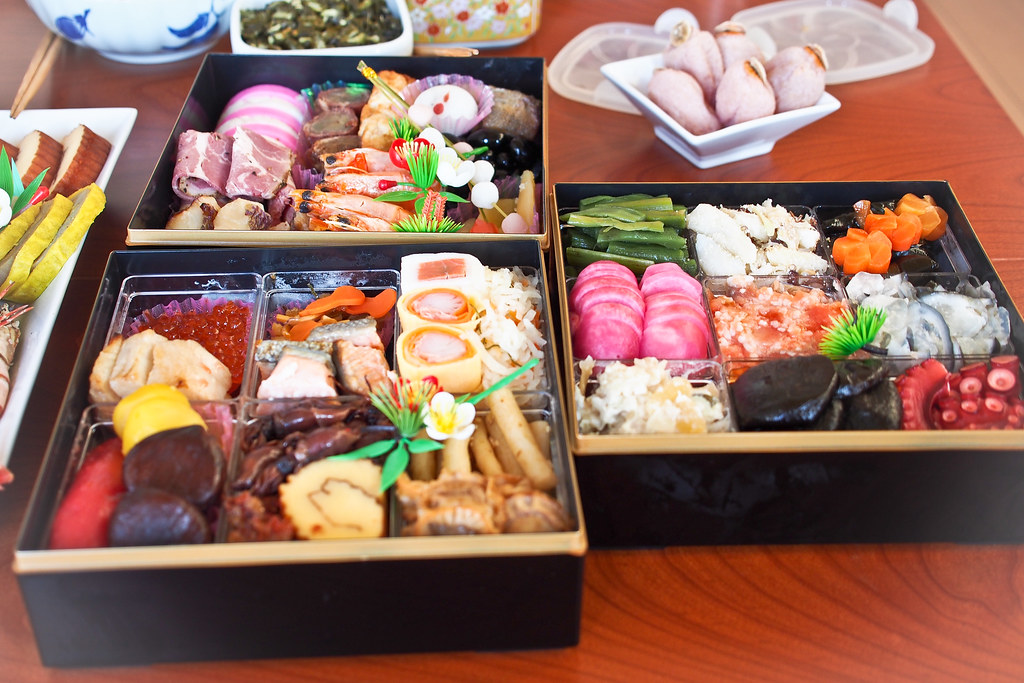
On New Year’s Day there’s a feast called O-sechi ryori. It takes days to prepare and plan and each item of the feast brings health, luck and prosperity for the year. Now a days you could easily buy it a department store or restraunts if ordered ahead of time. Another traditional snack would be mochi, chewy rice cake, these are also used for decorations and if you want to be traditional you make them on your own on new year’s. Most people just buy them because it takes alot of time to make.
“O-sechi Ryori” Photo Credits: vincentvds2
Another tradition that is very popular in Japan for New Years is Nenga, New Years greeting card. More than thousands of people mail them so they can show gratitude to those they know. It is told that if you receive one and haven’t send them one in the first place than you are obligated to send one back. An expectation to this is that if a family had death in the last year, you are to not send them one. Hatsumode, first shrine visited of the year, is another tradition in Japan. You got to a shrine pray, mention in a previous blog, ask any wishes for the year and get any luck, health and gratitude for the year. Make sure to buy some plaques! This tradition is done usually the day of New Years but can be done any day of the year. For more information click here.
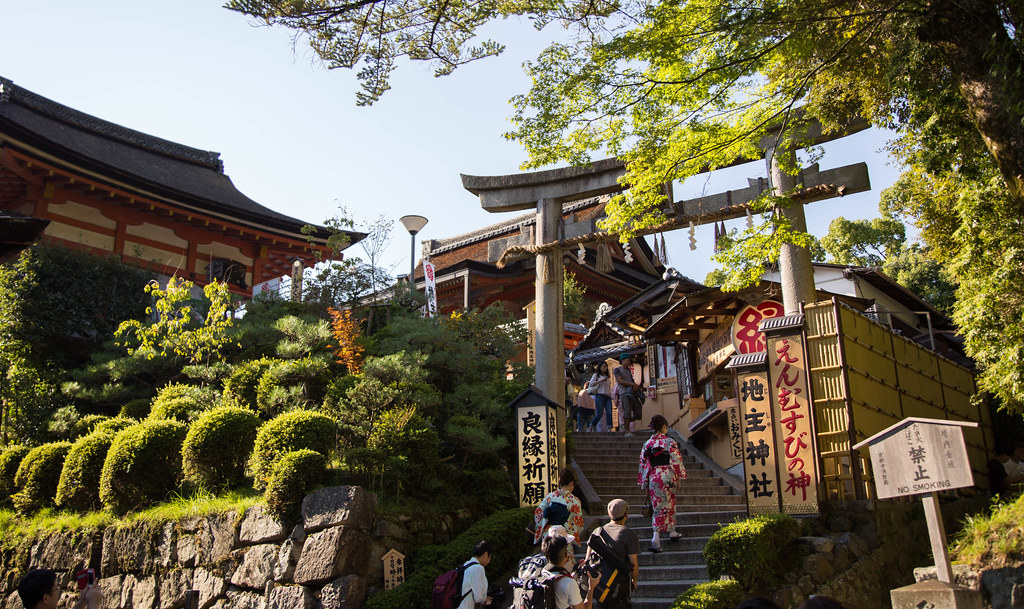
Have you ever seen a photo on Instagram or anywhere really of someone visiting a temple? Well when you travel to Japan you should add it to your list to visit in Japan. We will be talking about one of most famous and most visited temple in Japan, not just visited by the Japanese people but also by the entire world. Kiyomizu-dera temple is located in Kyoto, Japan. Like I said it is the most visited temple in Japan but it’s also one of the largest and oldest in Japan.It was built for the God of mercy, Kannon, in 778 A.D.. Also Kiyomizu- dera got its name from the waterfall that is within the temple.
“Kiyomizu-Dera” Photo Credit: Chee Kweng Teoh
In this beautiful temple you can participate in many of the rituals that can make you very lucky. One of the main rituals they have for you is the foundation that comes flowing from the Otowa waterfall. This fountain has 3 streams from which you drink from which you either drink from one. The first stream is longevity, for those who wish to live longer. The second stream is success at school and the third is luck in love. You should only drink from one stream, it is said that if you drink more than one stream that it makes you very greedy and become unlucky.
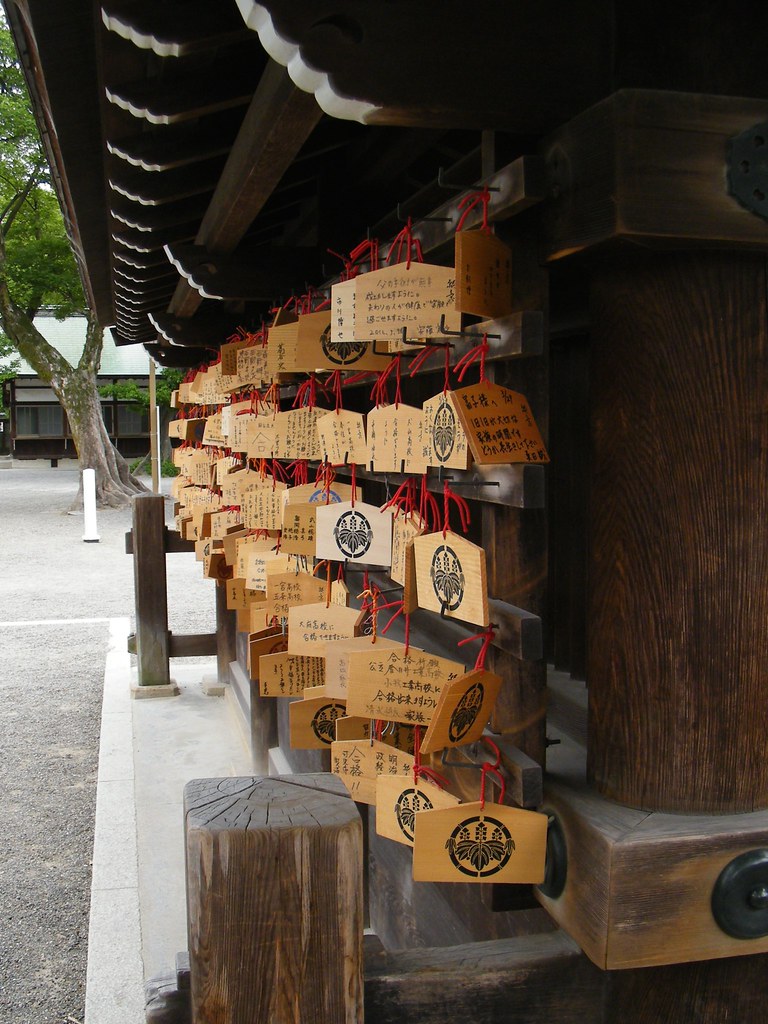
Another great place to visit in the temple is the Jishu Shrine. The Jishu Shrine is for those who need help in love or matchmaking. At the front of the Shrine there are two stones that are 59 feet apart. It is said that if you can walk from one stone to the other that you will be successful in finding love. At the shrine or at the temple you can find many “Ema”‘s. Ema in English means wooden wishing plaques. You can buy these for luck or any wish you decide to write down or it could be written. These plaques can always cost from anywhere as 500 to 1000 yen, $4.66-$9.32. You purchase them at the booth at the shrine and you can also seal your lucky charms. There’s usually someone at the booth but in some cases there won’t so there would be a box available for you to place your money and than grab a plaque. After you have purchase one there are 2 things you could do, depending on what belief you have. One being that on the picture side, you write your wish on the picture and than right your name and address in the back. The other belief is that you do not touch the picture side but you write your wish in the back. Than you hang it in another area of the temple, you can always buy another to take home. Once its hang they leave it there for the year and when it’s January 15 they burn them all at a ceremony to help your wish come true.
“Wishing Plaques” Photo Credits: zayzayem
When you pray at the shrine there are a few steps you have to do before you pray. First you bow your head once. Than you ring the bell in front of you by pulling on the rope with force only once. You throw whatever coins you have than you bow deeply twice. Than you clap twice with palms touching each other each time. After the second clap put your hands together and pray, once you finish you drop your hands and do a deep bow once more and your done. There’s another shrine somewhat similar that gives you a fortune. You would first ring a bell. Than you would pull a fortune slip. If you were to draw a bad fortune, also known as “Kyo”, you would tie it to a rack at the shrine so the gods can help turn your bad luck to good luck. So would you consider checking it out? Let me know below! For more information click here.
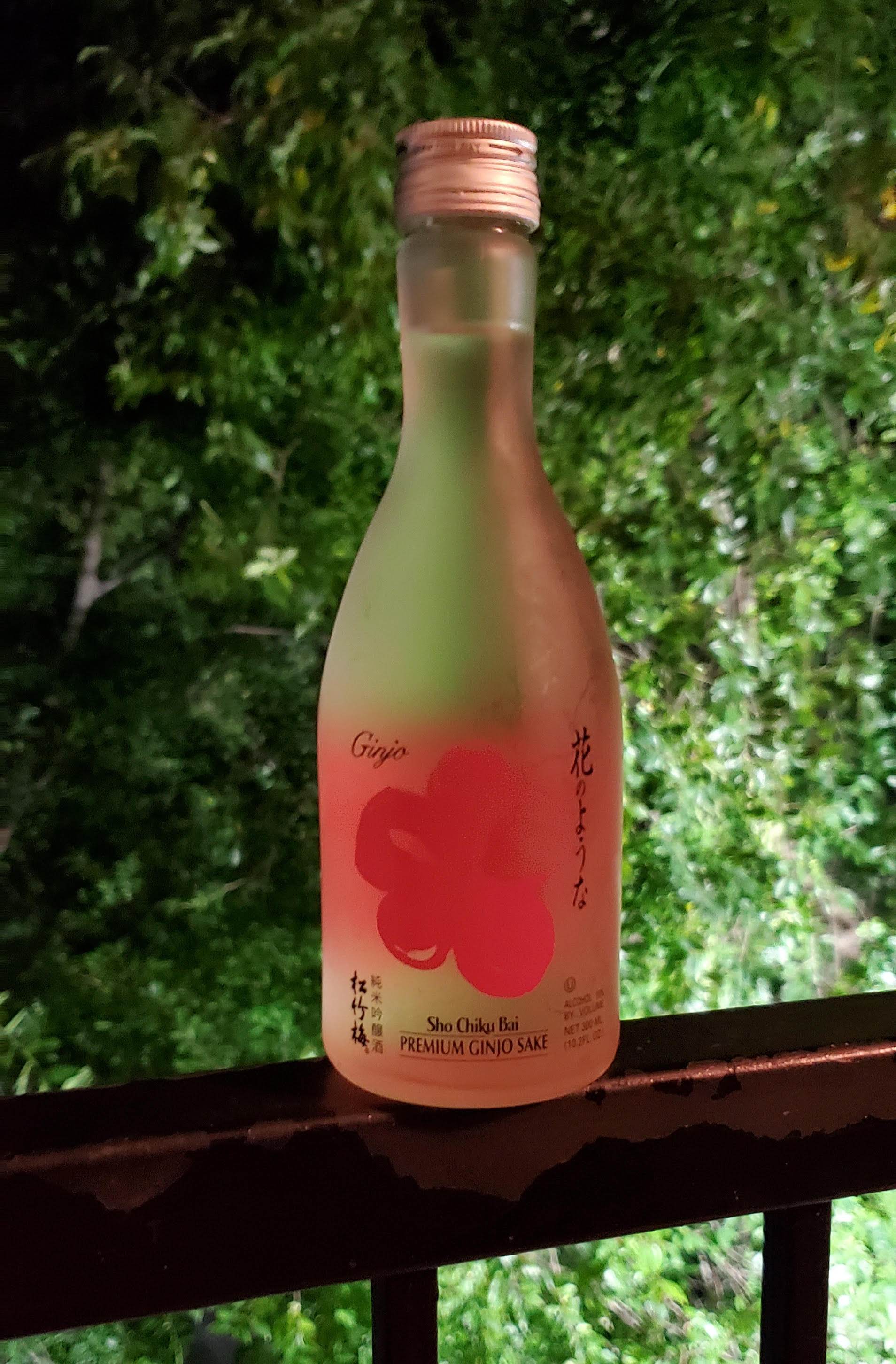
You can say Sake is one of the special delights a adult in Japan would have with there meal’s, especially ramen. Sake, for those who doesn’t know, is a alcoholic beverage, another name for it would be rice wine. A sake is pronounced like sa-ké in Japanese and it’s been a tradition for centuries and it’s more common and more popular than beer or wine in Japan. It is said that saké comes from China to 4800 BC era. Than in 300 BC it was introduced to the Japanese making it Japan’s most popular drink.
“Sake” Photo Taken by: Veronica Campos
In America we consider fast food as our top choice to go when going out. In Japan, they consider ramen as there top choice to go when going out. Just like the Sake, ramen is one of the special delights of Japan. Ramen is a noodle soup originally came from China, also. It is one of the most popular dishes in Japan and you could easily find a ramen shop when traveling to Japan. Compare to our American instant ramen, ramen in Japan is nothing like the instant one’s. They do have instant ramen but it’s still nothing like the American ramen. The ramen in Japan take’s time to create and the way they make it plays a huge part on the price of the ramen. You don’t have to go to expensive shop to try the best. There are many shops that are cheap and still has the best quality. I hope to be able to visit one of these shops soon! In my opinion, run down shops are still good as long as there food is good. There’s some good shops, you just have to explore them when you visit.
In competition with ramen, sushi is another popular dish in Japan. Sudhi contains vinegared rice, the option of seafood like shrimp, and vegetables. This popular dish is well known throughout the world and you can find sushi anywhere in America, even in H-E-B. But if you want to visit one of the best sushi places in the entire world it would have to be in Japan, in the city of Tokyo with Osaka being the second place. In my opinion sushi is delicious, especially the shrimp ones.
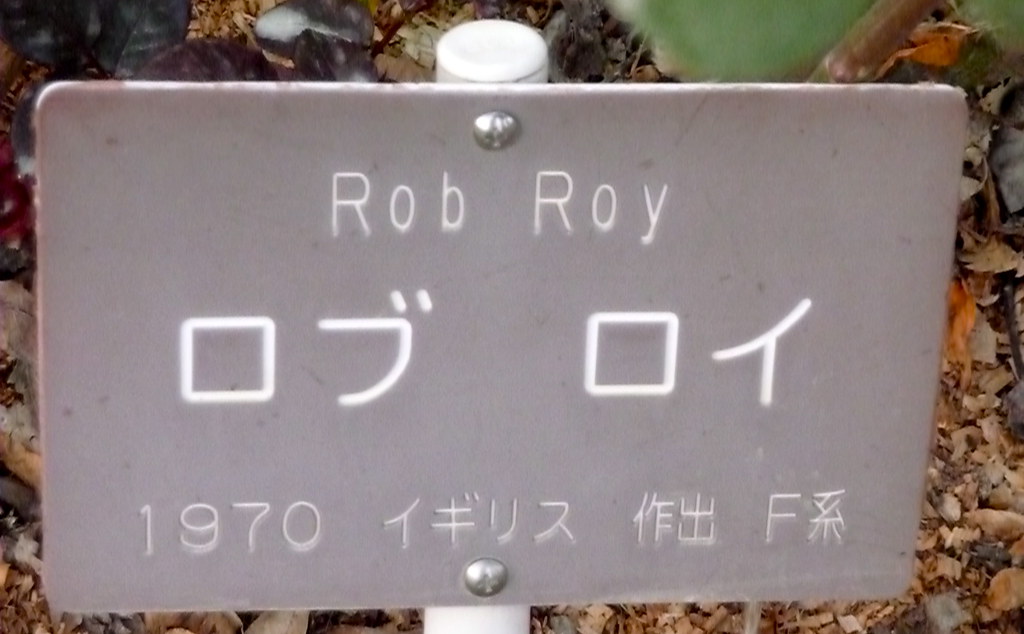
Have you ever seen a Japanese character? You may not know this but Japan has 3 writing systems, Hiragana, Katakana, and Kanji. They all are used in the everyday life in Japan. Katakana is used mostly for words that other countries uses like American, Hamburger, pizza, etc. but don’t really have a word for it in Japanese. Japanese people also use this to learn to speak English. They form the characters so they can try pronounce it in English. For example, coffee is written コーヒー in Katakana but not Hiragana. The romaji for コーヒー is koohii, pronouncing it like coohee, you have to extend the o and e a bit, not koohi.
Rob Roy being translated in Katakana as robu roi in the large characters. Photo credit: grevillea.
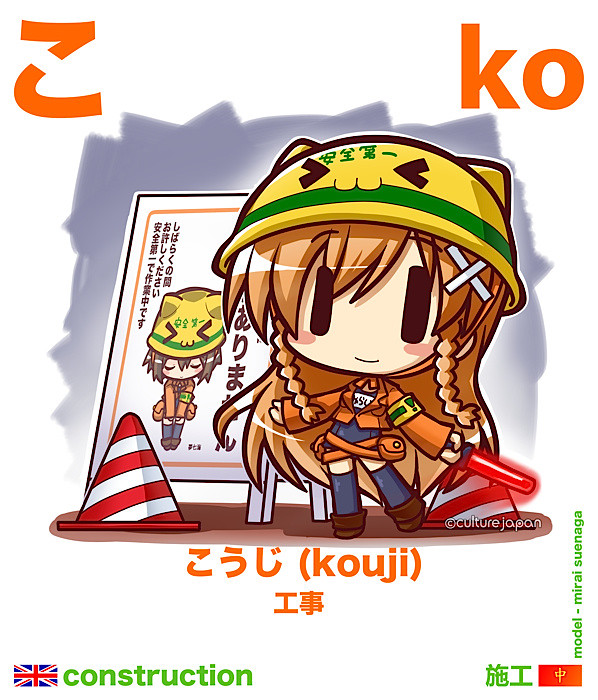
Hiragana is also used but mostly with Kanji to form sentences for grammar, participles, verbs. They can be used on their own but writing it can be tiring and long. It’s also more commonly used with children in elementary school before they start learning Kanji and for beginners trying to learn the language. Hiragana is the easiest to learn just because of the fact that there’s only 46 characters to learn and are not hard to write compared to Kanji. Katakana is little different to Hiragana only because of the writing. They both have the same romaji spelling. コ this meaning ko in Katakana and こ being in Hiragana.
Construction being translated in writing as Hiragana (kouji). “Moekana-ko” Photo Credit: Danny Choo.
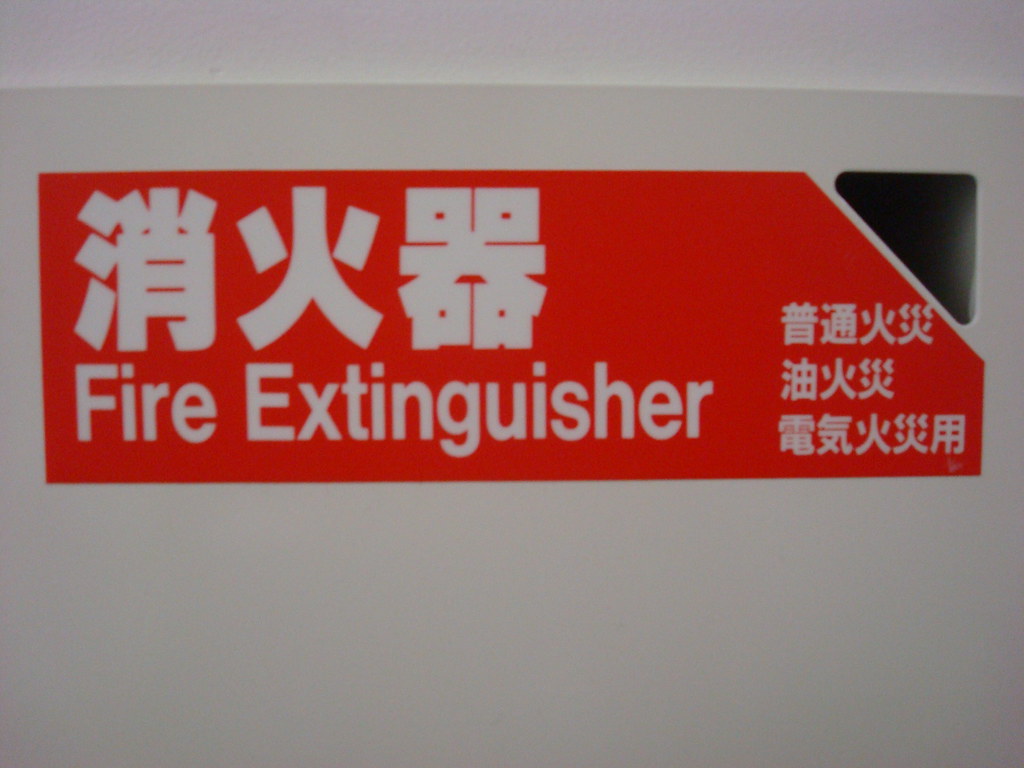
Kanji and Hiragana can be used together to form words in a sentence. Kanji helps make sentences more shorter, compared to using only Hiragana. Kanji only has 2,136 characters and there job is to help make writing more easier. Also making it more conveniently used for almost everything like products, store signs and etc. Kanji are actually from the Chinese characters and they took them and change them to fit with their language with some of them being kept the meaning the same for both languages. Kanji is difficult to write and learn being that there so many characters and they all have more than one meaning depending which one kanji you decide to putted by. Not even the Japanese people know how to write most of them. For example, one kanji could mean food. Depending on the second kanji you decide to put it with it could change the word from food to cafeteria or dining hall, as log it’s related to that kanji in some way. If you like to know more about kanji click here.
A Fire Extinguisher sign in Kanji. “Fire” Photo Credit: Phillip Jenkins.
Hello my name is Veronica Campos. I’m a junior at Texas State University and I am majoring in Electronic Media and minoring in Japanese. I moved here for my degree 3 years ago from a small town called Bellville, Texas. I chose to write my blog about Japanese Culture because I’m very passionate about the Culture since I was child. Since than I have wanted to be able to learn there language and their traditions. There so much to learn about there tradition and trends from food to there everyday rituals.
Hanging out on the Rail Road tracks. Photo Credit: Kacy Lynn Divjak.
I hope to be able to explore more deeper into their culture and discover new trends for me and for you all. There are some cultures’ I am familiar with like there language and there writing systems like hiragana, katakana, and kanji. I hope to teach you a little bit nihongo (Japanese) as we go on this journey we will be taking together. You can also learn some more on this website, if you are interested in learning Japanese. We will go further in and look what traditions they still do and what it means for the people of Japan.
My goal is to be able to target the American audiences, especially the younger audiences so they can learn the culture. There so much to learn but most people can’t distinguish what’s real and wha’t a stereotype. Most of the Americans have always think Japan is a interesting place but not just for there technology or anime but for there culture. I would like to be able to extend your knowledge and hopefully you will like Japan even more. I hope to be able to extend this to social media platforms like Facebook and Instagram. Instagram being the goal since I can publicly show pictures of all the fun and interesting this going on in Japan.

 Exploring the Japanese Culture