118 Yurika Tsutsumi: Blog Review


On my search for some interesting content on anything Japanese related, I encountered a website called 118 Yurika Tsutsumi. Her name is Yurika Tsutsumi I tried finding more about her but there isn’t much on her. So I will still mention her and her blog. Her blog isn’t like my mine but it provides information for someone who lives in Japan and in her posts she likes to talk about her day. She even talks about her culture and what is the right things to do and what not to do.
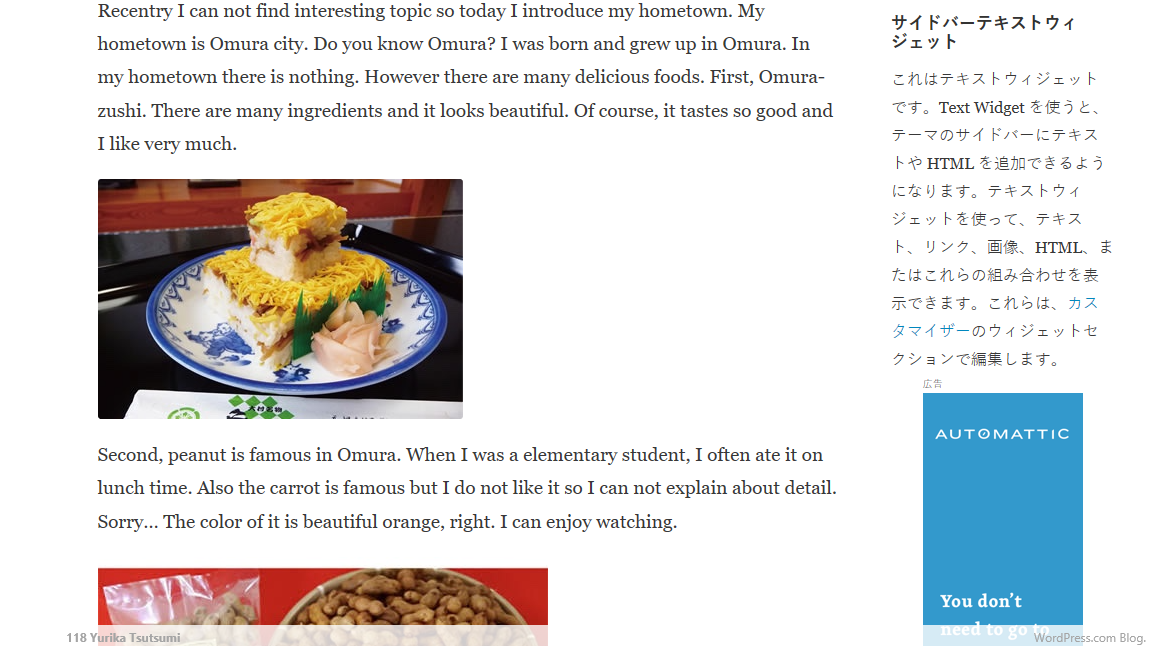

Yurika's Blog Post. Screenshot : Veronica Campos
Yurika’s Blog Post. Screenshot : Veronica Campos

In the picture above you can see one of Yurika’s posts. In this post you can see that Yurika is talking about one of her hometown’s delights. These’s types of post is what I think make’s her blogs unique. Her posts cover her daily routines and places she had visited in Japan. She even mentions a few things to do or how to act. For example, how to properly sit down at a dinner table or the way to greet the elderly.


She covers mostly everything about Japan and I love how she gives opinions on what we should try. She gives a positive view in Japan and that is what I love about her blogs. She keeps the blog interesting with pictures and a few paragraphs that aren’t long and boring. Her pictures are well taken and very interesting. She gives me a visual perspective on how Japan is and I would consider her blog a must see.
Exploring the Japanese writing system


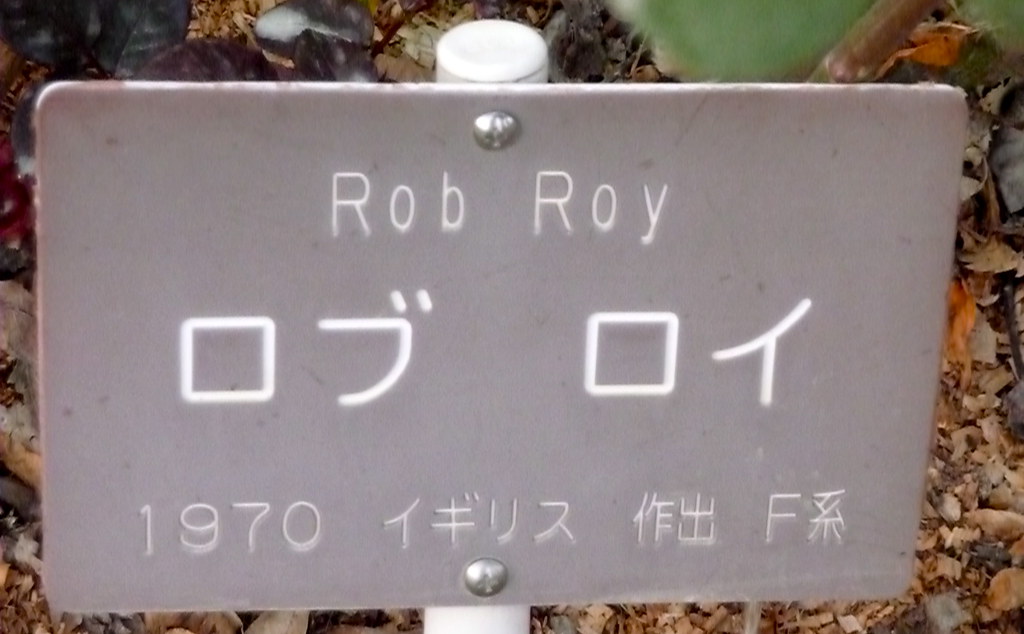
Have you ever seen a Japanese character? You may not know this but Japan has 3 writing systems, Hiragana, Katakana, and Kanji. They all are used in the everyday life in Japan. Katakana is used mostly for words that other countries uses like American, Hamburger, pizza, etc. but don’t really have a word for it in Japanese. Japanese people also use this to learn to speak English. They form the characters so they can try pronounce it in English. For example, coffee is written コーヒー in Katakana but not Hiragana. The romaji for コーヒー is koohii, pronouncing it like coohee, you have to extend the o and e a bit, not koohi.

Rob Roy being translated in Katakana as robu roi in the large characters. Photo credit: grevillea.

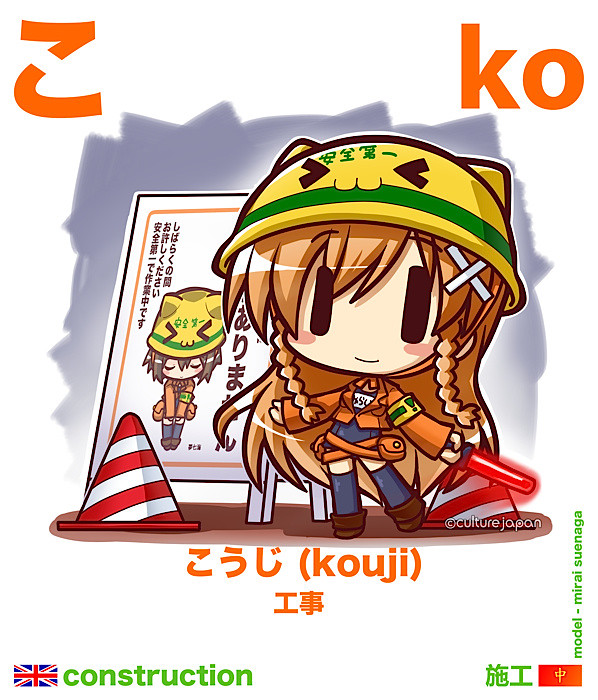
Hiragana is also used but mostly with Kanji to form sentences for grammar, participles, verbs. They can be used on their own but writing it can be tiring and long. It’s also more commonly used with children in elementary school before they start learning Kanji and for beginners trying to learn the language. Hiragana is the easiest to learn just because of the fact that there’s only 46 characters to learn and are not hard to write compared to Kanji. Katakana is little different to Hiragana only because of the writing. They both have the same romaji spelling. コ this meaning ko in Katakana and こ being in Hiragana.

Construction being translated in writing as Hiragana (kouji). "Moekana-ko"  Photo Credit: Danny Choo.
Construction being translated in writing as Hiragana (kouji). “Moekana-ko” Photo Credit: Danny Choo.

Kanji and Hiragana can be used together to form words in a sentence. Kanji helps make sentences more shorter, compared to using only Hiragana. Kanji only has 2,136 characters and there job is to help make writing more easier. Also making it more conveniently used for almost everything like products, store signs and etc. Kanji are actually from the Chinese characters and they took them and change them to fit with their language with some of them being kept the meaning the same for both languages. Kanji is difficult to write and learn being that there so many characters and they all have more than one meaning depending which one kanji you decide to putted by. Not even the Japanese people know how to write most of them. For example, one kanji could mean food. Depending on the second kanji you decide to put it with it could change the word from food to cafeteria or dining hall, as log it’s related to that kanji in some way. If you like to know more about kanji click here.

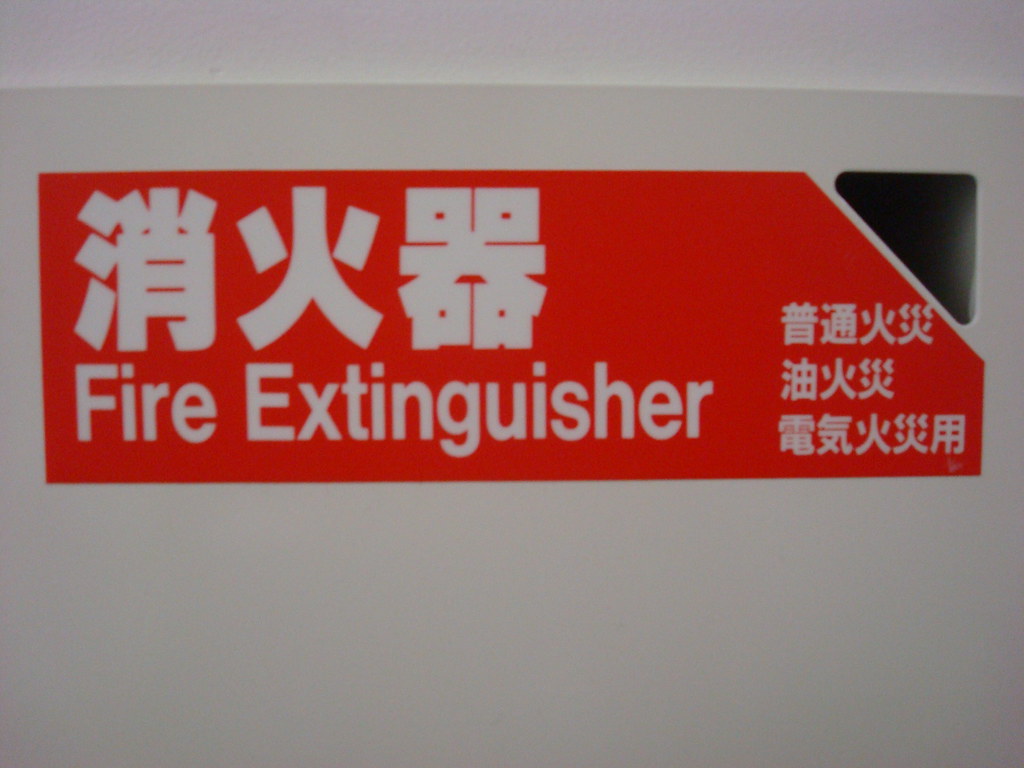
A Fire Extinguisher sign in Kanji. "Fire" Photo Credit: Phillip Jenkins.
A Fire Extinguisher sign in Kanji. “Fire” Photo Credit: Phillip Jenkins.

Introduction to my Blog


Hello my name is Veronica Campos. I’m a junior at Texas State University and I am majoring in Electronic Media and minoring in Japanese. I moved here for my degree 3 years ago from a small town called Bellville, Texas. I chose to write my blog about Japanese Culture because I’m very passionate about the Culture since I was child. Since than I have wanted to be able to learn there language and their traditions. There so much to learn about there tradition and trends from food to there everyday rituals.


Hanging out on the Rail Road tracks. Photo Credit: Kacy Lynn Divjak.

I hope to be able to explore more deeper into their culture and discover new trends for me and for you all. There are some cultures’ I am familiar with like there language and there writing systems like hiragana, katakana, and kanji. I hope to teach you a little bit nihongo (Japanese) as we go on this journey we will be taking together. You can also learn some more on this website, if you are interested in learning Japanese. We will go further in and look what traditions they still do and what it means for the people of Japan.


My goal is to be able to target the American audiences, especially the younger audiences so they can learn the culture. There so much to learn but most people can’t distinguish what’s real and wha’t a stereotype. Most of the Americans have always think Japan is a interesting place but not just for there technology or anime but for there culture. I would like to be able to extend your knowledge and hopefully you will like Japan even more. I hope to be able to extend this to social media platforms like Facebook and Instagram. Instagram being the goal since I can publicly show pictures of all the fun and interesting this going on in Japan.